It is the question most Sydney vendors quietly ask their agent and almost no stylist answers honestly: is property styling actually worth it when you are not selling a multi-million-dollar trophy home? When you are listing a three-bedroom unit in Dee Why, a tidy family home in Pymble, or a freestanding cottage in Manly Vale, the maths matters. A styling spend only makes sense if it returns more than it costs.
The honest answer is that property styling is worth it for the vast majority of homes under two million dollars, but not for every one of them, and not in every form. The wrong styling on the wrong home is wasted money. The right styling on the right home is one of the most reliable returns you can get before listing day. This is a practical guide to telling the two apart, with realistic numbers for the Sydney market in 2026.
The three styling options Sydney vendors choose between
Before we can talk about whether styling is worth it, you need to know what the options actually are. Sydney property styling for a sub-two-million home generally falls into three shapes, and the right one depends on the home, not on what a stylist is trying to sell you.
Full vacant styling. This is when the home is empty and the stylist brings in everything: sofas, beds, dining table, rugs, art, lamps, accessories. It is the most visually transformative option and the only realistic choice when you have already moved out. Cost depends on the size of the home, how many rooms are styled, and the length of the hire period, but it is the most significant investment of the three.
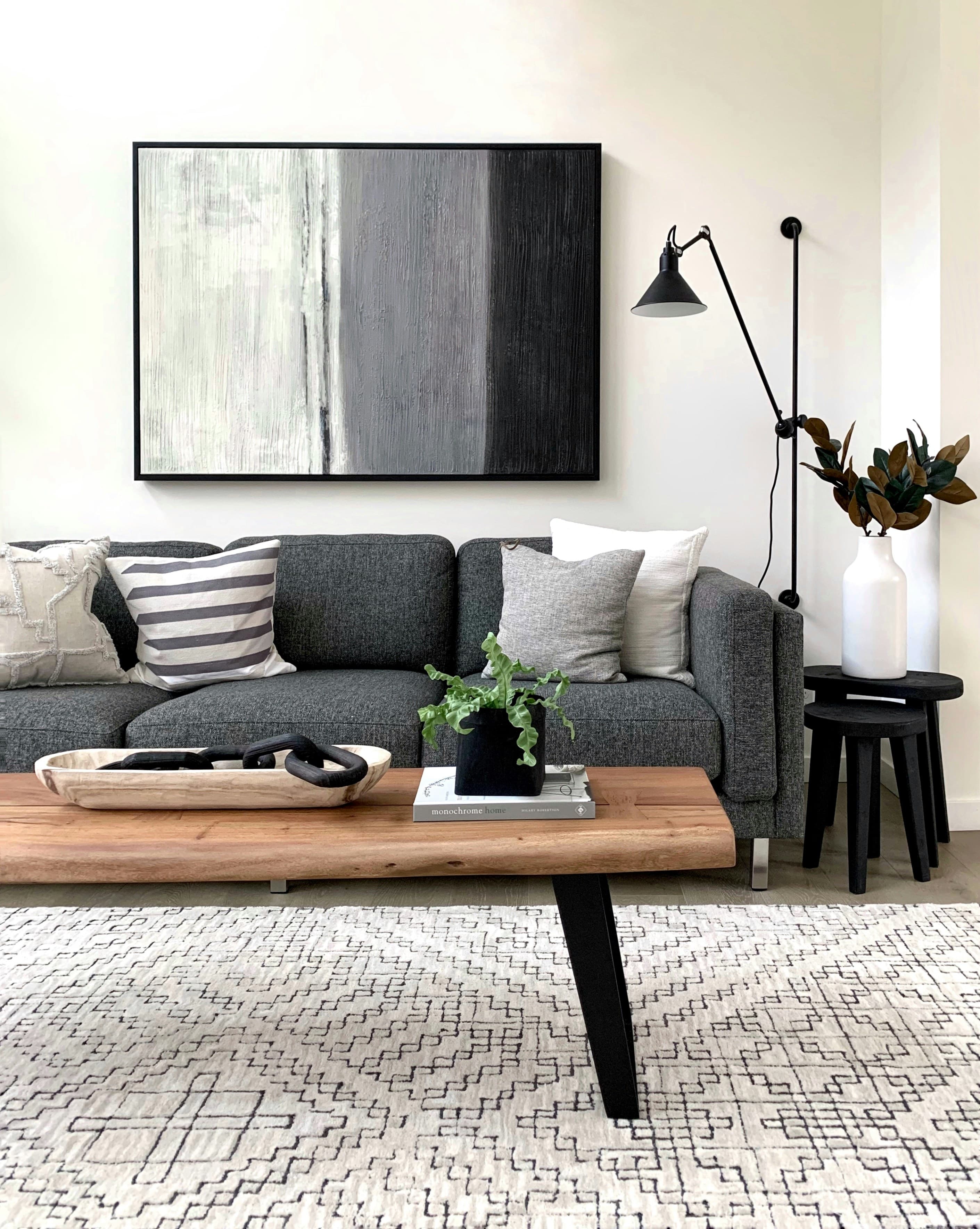
Partial styling. You are still living in the home, your existing furniture is decent, and a stylist supplements it with selected pieces — usually art, soft furnishings, lamps, side tables, rugs, and the smaller accessories that lift a space from lived-in to listing-ready. It is meaningfully less than a full vacant styling because you are not paying to hire and install a houseful of furniture.
Pre-sale consultation and hands-on help. Two related options at the budget-friendly end. A pre-sale consultation is a walk-through of the home with a written report — what to declutter, what to paint, where to spend, what to leave alone, what to fix before any photographer arrives. It is usually a flat fee for the visit and the report. Hands-on help is hourly: a stylist physically on-site with you, decluttering, restyling what you already own, packing away what does not work, and pulling the home together for photography. Most vendors use either one or the other; some use both.
Every styling job is quoted to the specific home, because no two homes need the same thing. A confident two-bedroom apartment with great furniture and good light needs very different work to a tired four-bedroom family home that has been lived in for thirty years. Be wary of any stylist who quotes you a fixed price without seeing the property.
A useful rule of thumb: full styling tends to cost in the order of half a per cent of a home's expected sale price. Partial styling is meaningfully less. A consult or hourly help sits well below either. None of these numbers is fixed — they are the shape of the market, not a price list.
The return on investment — what the numbers actually say
Industry studies and Sydney agent surveys consistently put the uplift from professional styling somewhere between five and ten per cent of the final sale price, with the upper end of that range applying to homes that were previously underpresented. On a home selling at $1.5 million, that is between $75,000 and $150,000 of additional sale price.
Even at the conservative end of that range — a five per cent uplift on a $1.2 million home — you are looking at $60,000 of value created. Set that against a styling investment that is almost always less than one per cent of the home's value, and the return is significant. The maths is rarely close.
There is also a faster-sale benefit that is harder to quantify but very real. Styled homes typically spend less time on market — a difference of one to three weeks at the Sydney median. Every week on market is a week of holding costs, agent campaign pressure, and erosion of the original asking price. A styled home that sells in week two for the asking price is almost always a better outcome than an unstyled home that sells in week six after two reductions.
When property styling is worth it — even under $2M
Styling pays for itself most reliably in five situations:
- The home is vacant. Empty rooms photograph badly, feel cold at open homes, and force buyers to imagine the space rather than emotionally connect with it. Full styling on a vacant sub-two-million home almost always pays for itself.
- The existing furniture is dated, mismatched, or genuinely worn. Buyers respond emotionally to what they see; tired furniture pulls the perceived value of the home down with it. Partial styling fixes this without forcing you to replace what you own.
- The home is competing in a popular price bracket. The $1.2M to $1.8M segment of Sydney is the most competitive in the city — there is almost always another comparable home for sale in the same suburb the same week. Styling is how yours stands out in the online photos that decide whether buyers even attend the inspection.
- The buyer pool is aspirational. First-home buyers, young families, and downsizers all buy with their imagination first and their calculator second. A well-styled home gives them a lifestyle to step into. An unstyled one asks them to do the work.
- Photography is everything in your campaign. Most buyers see your home online before they see it in person. The styled photos are the campaign. A well-judged partial styling that produces a thumb-stopping listing pays for itself the moment three extra inspections show up on day one.
When property styling is NOT worth it
Being honest about this matters. Not every home benefits from styling, and a stylist who tells you otherwise is selling, not advising. Skip or scale back styling when:
- The home is being marketed for redevelopment, a knockdown rebuild, or as a development site. Buyers in this segment are looking at land value, floor plans, and zoning. Furniture is irrelevant.
- The home is genuinely high-end and already beautifully styled to current taste. Some homes already photograph beautifully. Adding hired furniture can actually disrupt what is working.
- You are selling to a known buyer off-market. If your agent has a buyer lined up before the campaign launches, styling is largely a marketing cost for an audience that no longer exists.
- The home has significant disrepair that styling cannot disguise. A water-stained ceiling, broken cabinetry, or cracked tiles will pull more value down than any styling can lift up. Spend the styling budget on the repair first, then style what is left over if the budget allows.
If you fall into one of these categories, the better question is not “how do I style it?” but “where else does this money work harder?” Pre-sale repairs, professional cleaning, and a strong listing photographer often beat styling for these homes.
Partial styling — the under-rated middle option
For most Sydney vendors in the under-two-million bracket, partial styling is the genuine sweet spot, and it is underused because most large styling firms make less margin on it than full vacant jobs. You keep your own furniture where it works, supplement it where it does not, and end up with a campaign-ready home for considerably less than the cost of a full vacant styling.
Partial works particularly well in Sydney's family-home market — the Northern Beaches cottages, North Shore Federation homes, and Hills District family houses where the existing furniture is generally fine but the accessories, art and soft furnishings need a confident editorial eye to bring the home up to listing standard.
How to decide — a simple framework
If you are weighing whether to style your sub-two-million home, run it through this short test:
- Is the home vacant or visibly tired? Yes — styling almost certainly pays off.
- Is your home photographing well in current condition? If you would not stop scrolling at your own listing, styling will lift it.
- Are there comparable homes selling in your suburb right now? Yes — the styled one will win the inspection traffic.
- Do you have a clear repair list outstanding? Fix those first; style what remains.
- Is there budget left after the campaign costs? Stylists who offer pay-at-settlement options (Styling Lab does) remove the up-front cash issue entirely.
The honest bottom line
For a Sydney home selling between $1 million and $2 million, property styling is one of the highest-return investments you can make before listing. The maths is straightforward: a modest styling investment that adds five to ten per cent to the sale price is a return that almost no other pre-sale decision matches.
The exceptions matter though. Development sites, off-market deals, and homes already styled beautifully do not need it. And styling cannot disguise structural disrepair — it amplifies what is there, good or bad. For everyone else, the question is not whether to style, but which option fits the home: full vacant, partial, or a consult with hands-on help.
If you are weighing it for your own sale, a fifteen-minute conversation will usually settle the question faster than a blog post can. We do design and styling consultations across the Northern Beaches, North Shore and Hills District, and we are happy to tell you honestly when styling will not pay off for your home — because the only thing worse for our business than not winning a job is winning one that should not have happened.
Related Reading
Linzi Lithgow is the principal of Styling Lab, an interior designer and Project Manager based in Pymble, working across Sydney's Northern Beaches, North Shore, and Hills District. Styling Lab specialises in pre-sale property styling and integrated repairs coordination, bringing design judgement and end-to-end project discipline to every campaign.