If you live on Sydney's Upper North Shore and you're thinking about refreshing your home — whether for yourself, for a renovation or to prepare for sale — understanding what's happening in interior design right now will save you both money and regret.
The homes of Pymble, St Ives, Wahroonga and Turramurra have a character that's entirely their own. Generous proportions, established gardens, a connection to the natural landscape and a buyer and homeowner profile that values quality, restraint and longevity over trend-chasing. Interior design on the North Shore has always reflected that — and in 2026, the broader direction of Australian design is finally catching up.
This guide covers the key interior design trends shaping homes across the Upper North Shore this year, how they apply specifically to the homes and lifestyle of this market, and how to work with them in a way that feels right for your property and your life.
Interior design North Shore — the 2026 direction
The clearest way to describe where interior design is heading in 2026 is this: away from cold and perfect, toward warm and considered.
The sharp all-white aesthetic that defined the past decade is softening across the board. In its place, Australian designers and homeowners are gravitating toward spaces that feel grounded, textured and genuinely liveable — interiors that reflect how people actually live rather than how a magazine tells them they should.
For the North Shore specifically, this shift feels particularly natural. The homes of Pymble, St Ives, Wahroonga and Turramurra were never really suited to stark minimalism. Their architecture — federation details, high ceilings, established gardens visible through large windows — always called for something warmer. The 2026 design direction finally validates what many North Shore homeowners have quietly known for years.
Warm, earthy palettes replacing cool greys
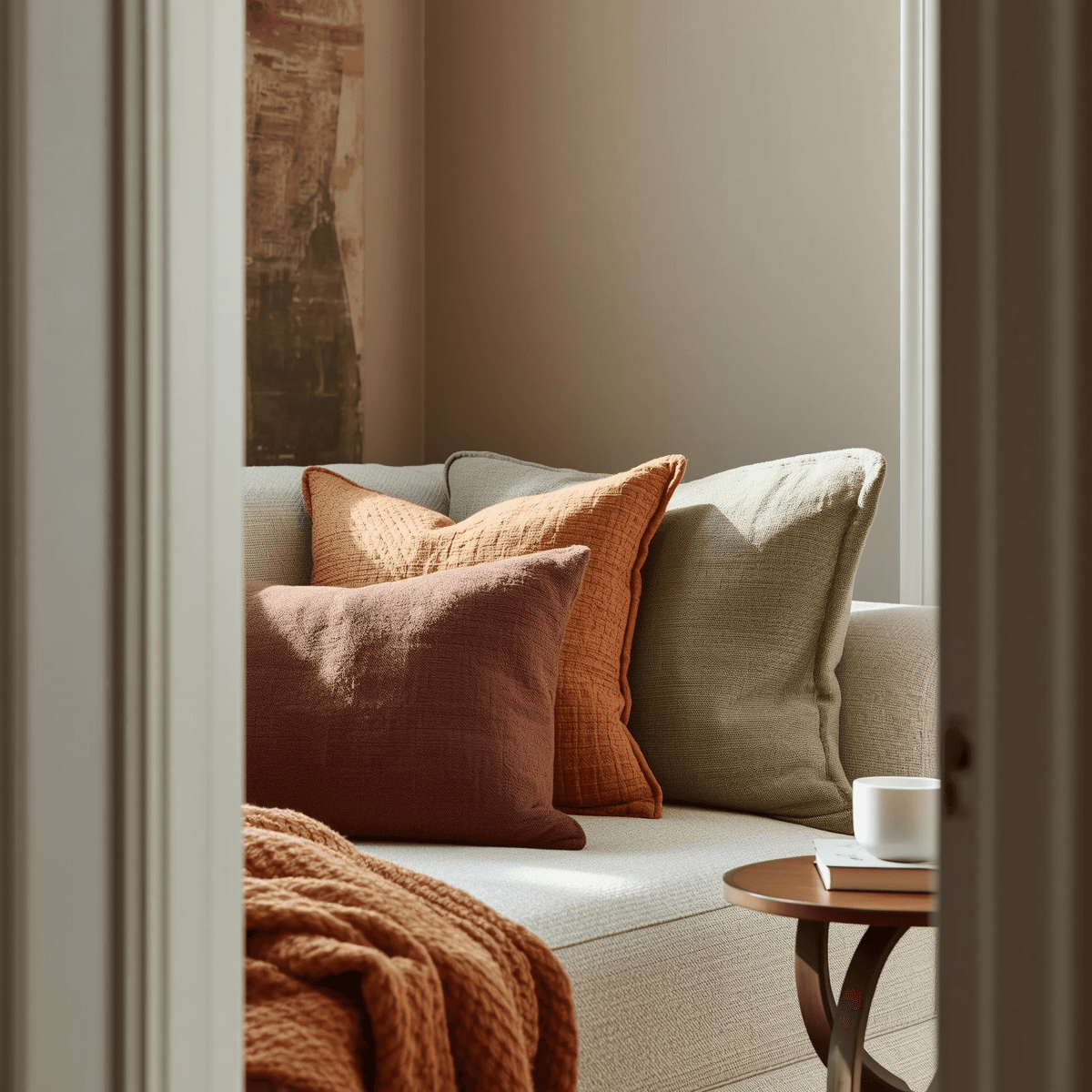
The dominant colour shift of 2026 is the move away from cool grey tones toward warm, earthy hues. Shades like ochre, caramel, clay, terracotta and soft sage are replacing the cool greys that dominated the past decade.
For Upper North Shore homes, this shift is particularly well-suited. The natural light in suburbs like Wahroonga and Turramurra — typically warmer and more filtered through established tree canopy than coastal Sydney — responds beautifully to warm palette choices. Colours that read flat or heavy in a brighter coastal environment come alive in the dappled light of a North Shore garden suburb.
Pantone's 2026 Colour of the Year — Cloud Dancer, a soft, airy off-white — reinforces this direction. It's a white that reads warm rather than clinical, creating what Pantone describes as a calming, quiet backdrop that supports rest and clarity. For homes in Pymble and St Ives where proportions are generous, Cloud Dancer works beautifully as a primary wall tone anchored by warm timber, natural stone and considered textile layering.
How to apply it on the North Shore: Introduce warm tones through wall colour, soft furnishings and accessories before committing to anything structural. A warm linen sofa, terracotta cushions and a natural jute rug can shift the entire feeling of a living room without a single structural change.
Texture and layering over flat minimalism
One of the strongest shifts in 2026 interior design is the move from flat, minimal surfaces toward layered texture. Linen, velvet, wool, rattan, natural stone and timber are being combined to create depth and warmth that purely visual design simply cannot achieve.
This is particularly relevant for the North Shore market where homes are typically larger and need texture to feel considered rather than empty. A generous Turramurra living room styled with a single sofa and minimal accessories reads as unloved. The same room with layered textiles — a wool rug, linen cushions, a cashmere throw, natural timber side tables and considered artwork — reads as curated, cared for and valuable.
The trend toward quality textiles specifically is worth noting. Durable, natural fabrics — cashmere, linen, quality wool — are being prioritised over synthetic alternatives. For homeowners making considered long-term investments in their North Shore property, this aligns perfectly with how Upper North Shore buyers and residents tend to think — buy less, buy better.
How to apply it on the North Shore: Focus on the tactile experience of a room, not just its appearance. Run your hand across surfaces. If everything feels the same — smooth, hard, uniform — introduce contrast through a textured rug, a woven cushion or a linen throw. Three different textures in a room is the minimum. Five is better.
Timber — darker tones returning selectively
Lighter timbers have dominated the past decade across Sydney's North Shore — bleached oak floors, white-painted timber joinery, pale Australian hardwoods. In 2026, that's shifting subtly. Darker timber tones are returning — but selectively, as grounding, anchoring elements rather than wall-to-wall coverage.
Think rich walnut furniture against lighter flooring. A dark timber dining table in a room with warm white walls. Feature cabinetry in a deeper wood tone that grounds an otherwise light kitchen. The key is contrast and intention — using darker timber purposefully rather than returning to the heavy, dark-everywhere approach of an earlier era.
For the classic federation and older-style homes common in Wahroonga and Turramurra, this is a natural direction. These homes were built around the warmth and character of timber — returning to it feels authentic rather than trendy.
How to apply it on the North Shore: If your home has original timber features — floorboards, joinery, window frames — consider restoring and celebrating them rather than painting or replacing. An original Wahroonga hardwood floor restored to a warm mid-tone is far more valuable and characterful than a pale engineered alternative.
Metallic finishes — the return of silver and nickel
Brass and brushed gold have dominated hardware and fixtures for the better part of a decade. In 2026, cooler metallics are re-emerging — silver, chrome, nickel and brushed steel are being used alongside warm tones to create interiors that feel more balanced and less period-specific.
This doesn't mean wholesale replacement of existing brass fixtures. The more sophisticated approach is mixing — allowing brass and nickel to coexist in a way that feels collected and layered rather than coordinated and uniform. A nickel tap alongside a brass pendant light. Silver-toned accessories on a warm timber shelf.
For North Shore homes at prestige price points — particularly in St Ives and Pymble — this nuanced approach to metallics signals a level of interior sophistication that buyers and visitors respond to instinctively, even when they can't articulate exactly why.
How to apply it on the North Shore: Introduce silver tones through accessories first — picture frames, trays, candleholders, decorative objects. It's the lowest-risk way to test the shift before committing to fixture changes.
Defined zones and flexible spaces
Open plan living isn't disappearing but it is being reconsidered. The 2026 direction is toward homes with more clearly defined zones — spaces that offer choice, privacy and calm within an open footprint. Secondary lounges, reading nooks, defined dining areas and flexible rooms that can serve multiple purposes are all gaining ground.
For the large family homes of Pymble, Wahroonga, Turramurra and St Ives, this is genuinely relevant. A five-bedroom North Shore home that functions as one large open flow can feel disconnected and hard to inhabit well. The same home with clearly considered zones — a defined study area, a separate sitting room, a kitchen that reads as distinct from the living area — feels more considered, more liveable and more valuable.
This trend also responds to the continued normalisation of working from home. North Shore families increasingly need their homes to function across multiple simultaneous uses — adults working from home, children studying, shared family spaces — and the design of the home needs to support that without sacrificing the sense of calm that characterises the Upper North Shore lifestyle.
How to apply it on the North Shore: Use furniture placement, rugs and lighting to create defined zones within open spaces rather than adding walls. A large rug anchors a living zone. A pendant light defines a dining area. A bookshelf and armchair create a reading corner. Zones don't require structural work — they require considered arrangement.
Biophilic design — bringing the garden in
Biophilic design — the connection between interior spaces and the natural environment — has been building for years and reaches a new level of maturity in 2026. The focus is on maximising natural light, incorporating indoor greenery and using organic materials in a way that creates a genuine sense of calm and connection to the outdoors.
For the North Shore this is perhaps the most natural fit of any 2026 trend. Pymble, St Ives, Wahroonga and Turramurra are fundamentally garden suburbs. The tree canopy, the established gardens, the views to bush reserves — this is the character that distinguishes the Upper North Shore from every other part of Sydney. Interior design that ignores this context and turns its back on the garden is missing what makes these homes special.
The best North Shore interiors of 2026 will treat the garden as an additional room — allowing views to the garden from key living spaces, using materials that echo the natural palette outside, and designing a genuine flow from interior to outdoor entertaining.
How to apply it on the North Shore: Start with window treatments. If your curtains or blinds are blocking natural light and garden views, that's the first thing to reconsider. Sheer linen curtains that filter light while maintaining the garden connection are both the 2026 direction and the right choice for these suburbs specifically.
Interior design for North Shore properties going to market
If you're preparing your Pymble, St Ives, Wahroonga or Turramurra home for sale, understanding the 2026 design direction has direct commercial relevance.
Buyers in this market in 2026 are sophisticated, visually literate and responding to the same design shifts described above. A property that presents with a warm, considered, textured interior — natural materials, layered textiles, warm palette — will resonate with Upper North Shore buyers in a way that a cold, flat, minimally styled property simply won't.
The pre-sale opportunity on the North Shore is not to redecorate to the latest trend. It's to present the property in a way that feels timeless, cared for and genuinely desirable to the specific buyer walking through the door. That requires an understanding of both the design landscape and the psychology of this specific buyer — which is exactly what we bring to every North Shore property we work with.
Interior design consultations — Pymble, St Ives, Wahroonga and Turramurra
Styling Lab offers interior design consultations across the Upper North Shore — whether you're refreshing your home for yourself, preparing for a renovation, or getting ready to go to market.
As a qualified interior designer based in Pymble, our founder Linzi brings a genuinely local understanding of these suburbs, their homes and their buyers to every consultation. Our approach is not trend-led — it's grounded in the specific character of your property, how you want it to feel and what you're trying to achieve.
For clients preparing to sell, we offer a complimentary pre-sale walkthrough and report as part of our 2026 founding client offer.
Free for 2026: our pre-sale walk-through and written report — usually a $250 service — is complimentary for vendors selling this year. It's a no-obligation, room-by-room assessment of what's worth doing, what to skip, and how your home should be presented to its market.
Get in touch via the contact page or call Linzi directly on 0432 469 014.
Related Reading
Published June 2026. Styling Lab is a Sydney property styling and interior design firm based in Pymble, servicing the Upper North Shore, Northern Beaches and Hills District. Our founder Linzi is a qualified interior designer with a decade of project management experience.